
- No verbal quotes or vague dates. Project scope, timeline, and costs confirmed in writing.
- Home
- /
- Vinyl Flooring Installation
Expert Installation of Luxury Vinyl Plank (LVP) and Tile Flooring
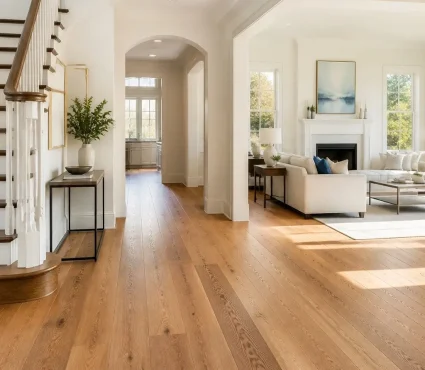
- Offering 100% waterproof performance, stunning wood or stone-effect finishes, and our high-quality expert installation, we provide vinyl floor installation across New Jersey and Pennsylvania that transforms any room.
Years in Business
0
+
Vinyl Flooring Installation
0
+
Average Review Score
0
.0
Licensed & Insured
0
%
- Why Vinyl
Waterproof, Durable, and Beautiful - Flooring Without Compromise
With impressive waterproof performance, long-lasting durability, and readiness for kids, pets, and anything your life throws at it, a vinyl floor delivers value and style to any room.
100% Waterproof for Any Room
LVP has a rigid core that is impervious to water, so it is a great choice for kitchens and even bathrooms, where porous wooden floors are not suitable.
Scratch-Resistant Surface Makes It Perfect for Pets
The commercial-grade wear layers of LVP mean it is impressively scratch-resistant, great for high-traffic areas and any home where pets damage softer flooring.
Get the Look of Real Wood or Stone Without the Cost
LVP is available in a wide range of highly realistic wood and stone finishes, but at a much lower price point and requiring a lot less maintenance too.
Soft, Warm, and Comfortable Underfoot
The cushioning cores of LVP and vinyl tiles provide a soft feel underfoot, deadening noise and giving a feeling of warmth that other floors cannot match.
Our Professional Vinyl Flooring Installation Process
Our six-step process takes you from old floor to newly installed vinyl with minimal hassle and reliable quality.
01
Free In-Home Consultation and Precise Measurement
Our home visit includes a full consultation on the type and style of vinyl flooring you are looking for, along with a precision measurement process and full subfloor assessment.
02
Subfloor Assessment, Levelling, and Moisture Testing
We inspect your existing subfloor for condition and levelness. LVP is more forgiving than most flooring types, but moisture issues and unevenness must be dealt with.
03
Acclimation and Material Preparation
We deliver the vinyl planks and leave them to acclimate in the room environment in compliance with the manufacturer’s recommendations for a quality, long-lasting finish.
04
Perimeter Planning, Layout Staggering and Underlayment Setup
We plan out the starting rows, stagger patterns, and expansion gaps needed for the room, and underlayment is installed if needed, depending on the subfloor and product involved.
05
Precision Cutting and Plank Installation
Planks are laid to the plan, with precision cuts to ensure a perfect fit around any obstacles or walls, and installed using the most appropriate approach the specific materials require.
06
Trim, Transition Strips, Baseboard Reinstallation, and Final Inspection
All thresholds are installed at transitions and doorways; baseboards are reinstalled around the room. Final clean and inspection to complete the install.
- Applications
Where Vinyl Flooring Works Best
With a waterproof core and soft but durable wear layer, LVP flooring is both resilient and comfortable, making it suitable for a wide range of applications.
Bathrooms and Kitchens
With complete waterproof performance, LVP is a great choice for bathrooms and kitchens, where traditional wooden and laminated floors struggle.
Basements and Utility Rooms
Compatible with concrete subfloors, LVP offers impressive moisture barrier protection and provides comfortable, insulating performance underfoot.
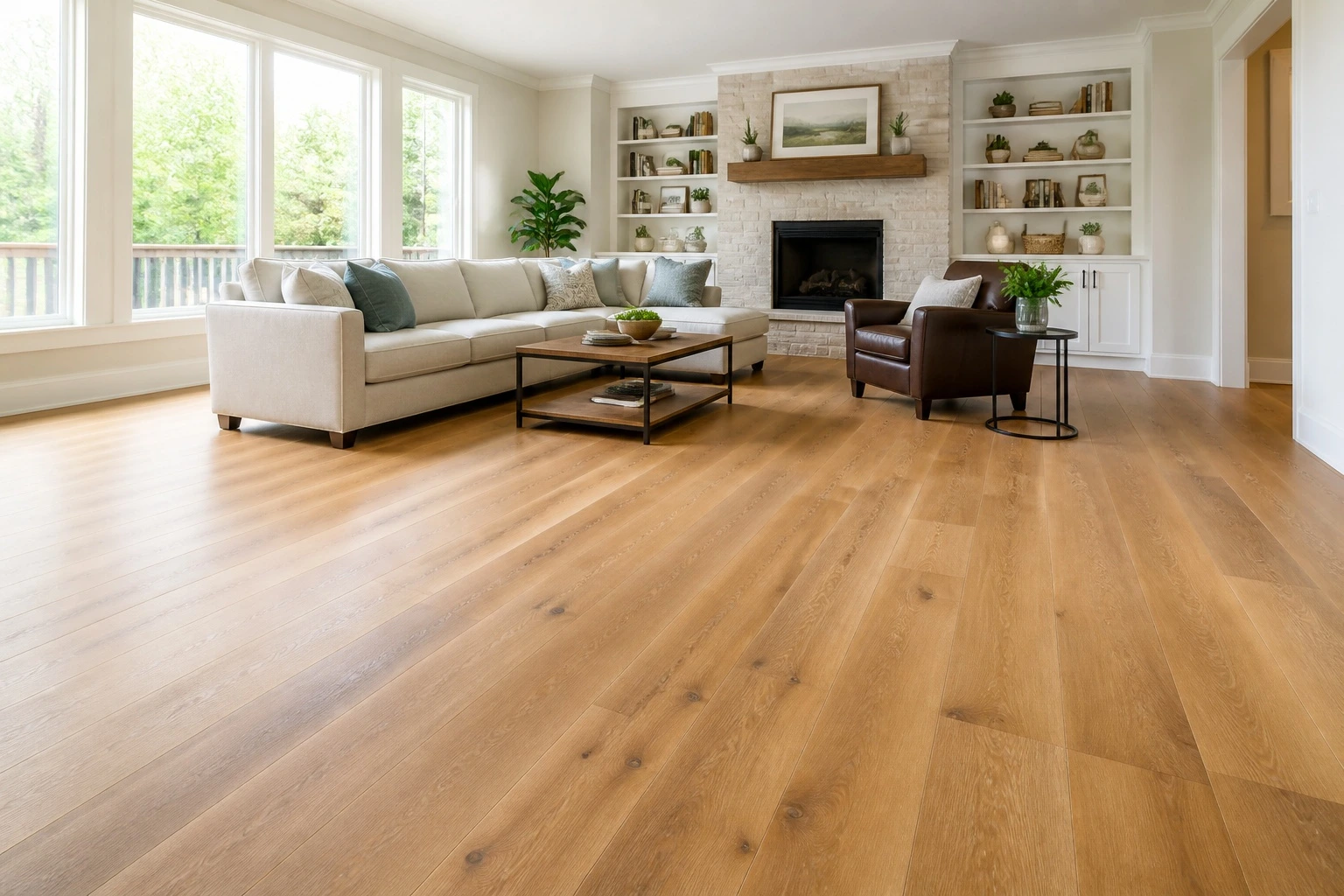
Living Rooms and Open Floorplans
Get a seamless wood-floor look throughout any space, including high -traffic areas. LVP flooring can flow through an entire home to provide consistent performance and a stunning, unified appearance.
Mudrooms and Active Homes
With scratch-resistant surfaces that are easy to clean and sanitize, whether it's pets, messy shoes, or getting back from an outdoor adventure, LVP flooring can cope with whatever you throw at it.
- Material Comparison
LVP vs Hardwood vs Tile: Which is Right for You?
Each flooring type has different benefits and trade-offs. Our table explains which to use and when.
| Luxury Vinyl Plank | Solid Hardwood | Ceramic / Porcelain Tile | |
|---|---|---|---|
| Cost Level | Low to Mid | High | Mid to High |
| Waterproofing | Excellent — 100% waterproof | Poor — moisture damages wood | Excellent — grout varies |
| Scratch Resistance | Very Good — thick wear layer | Moderate — species dependent | Excellent — but brittle |
| Maintenance | Very Low — wipe clean | Moderate — refinishing required | Low — grout cleaning required |
| Comfort Underfoot | Warm, soft, quiet | Warm, natural, solid | Hard, cold, loud |
| Subfloor Compatibility | Concrete, wood, existing tile | Wood subfloor preferred | Concrete or backer board |
| Refinishing Potential | None | Yes — multiple times | Regrout only |
| Best Room Placement | All levels, all rooms | Above-grade dry rooms | Wet areas, high-heat zones |
- Product performance varies by manufacturer and specification. We help you select the right product during your free in-home estimate.
Cost Factors in Vinyl Installation
As an affordable, durable, and water-resistant choice, vinyl flooring has a lot to offer for your budget. Here are the things that impact costs when planning your new floor.
Square Footage and Room Complexity
The larger the area, the less per square foot it costs thanks to labor efficiencies. Small rooms, stairs, and complex layouts need a higher level of labour per square foot, adding to the costs.
Vinyl Grade and Wear Rating
Commercial grade LVP has a higher wear rating, and while it is more costly per square foot to purchase, it has significantly higher longevity, offering more value in high-traffic installations. For premium and low-wear areas, standard grade vinyl offers a budget-friendly solution.
Subfloor Preparation
Vinyl requires a level, robust substrate. We assess the subfloor and remedy any issues, install waterproof membranes, levelling compounds, and moisture barriers as needed for any specific installation.
Pattern Complexity
Simple layouts are less labor-intensive and cost less. More complex designs, with intricate patterns that require significant cuts and shaping, increase labor requirements and cost more.
Furniture Removal and old Floor Demolition
We’ll take all the furniture out of the space for you, remove the old floor, and take away the debris. We include this in our pricing.
Installation Method
The method of installation impacts overall costs due to variations in labor requirements. Floating installations take less time and save money, while glued applications take longer and cost more, but do maximize stability for high-traffic areas.
Project Timeline and What To Expect
We proceed with each project in defined phases, taking you from first assessment to final walkthrough. Knowing how this works makes planning your home much easier.
- 1–2 WEEKS
Consultation and Measurement
Our home visit includes a consultation on the style and type of flooring you want, your budget, a detailed measurement of the rooms, and finally an assessment of the subfloor condition.
- 1 WEEK
Material Selection
We offer an extensive range of vinyls covering various wear grades, textures, and finishes. We'll present samples so you can find the ideal option for your home and budget.
- 3–7 DAYS
Subfloor Preparation
We clean the subfloor, ready for inspection. If we find damage or unevenness, we address it at this point, then proceed with moisture barriers and underlayment if required.
- 3–5 DAYS
Acclimation and Site Prep
Vinyl is delivered to the site and stored in the room to acclimate as per the manufacturer's recommendations. We will then remove furniture and prepare the area ready for the new flooring.
- 2–7 DAYS
Installation
We use either floating or glued methods of installation depending on the material and situation, whichever is best for your floor. Transitions and seams are expertly managed to deliver the professional finish you want.
- 1–2 DAYS
Trim and Transitions
We finish the install with transitions, trims, and moldings, followed by a thorough clean before final inspection for your approval.
- Timeline varies depending on square footage, condition of the subfloor, and material choices, along with installation method, pattern requirements, and room complexities.
- Why Choose Us
Why Homeowners Trust PHS Construction for Vinyl Installation
We have decades of experience providing high-quality flooring installation for homeowners in New Jersey and Pennsylvania. We are vinyl experts, with fair, upfront pricing, quality materials, and professional results, every time.
Decades of Hands-On Construction Experience
PHS Construction has served the NJ and PA regions since the 1970s. We have a proven track record as expert flooring installers, including all types and grades of vinyl you may want.
In-House Certified Installers – No Unvetted Subcontractors
We don’t use subcontractors, so your install will be carried out by our own in-house team. They do all the work from start to finish to ensure consistency and quality at every stage.
Transparent, Itemized Pricing with No Hidden Costs
We provide full upfront pricing with detailed quotes, so you know exactly what it costs before work begins, with no hidden extras, guaranteed.
Fully Licensed and Insured Service Protection
We carry full liability coverage and valid NJ and PA contractor licenses to make sure you and your property are protected from our first visit to the last.
- faq
Frequently Asked Questions About Vinyl Flooring Installation
The simple answers to the most popular questions we get asked about vinyl flooring installation.
What is the difference between SPC and WPC luxury vinyl plank?
SPC, or Stone Plastic Composite, uses a very rigid, dense core, and that means the planks hardly flex at all, so they are incredibly stable dimensionally. This makes them a better option for uneven subfloors, and they are better at resisting heavy loads. Wood Plastic Composite (WPC) flooring uses a foam core, which feels softer and warmer underfoot. This makes WPC a preferred option for living spaces, and especially good for basements and other unfinished spaces. In general, WPC is the leading choice for residential projects, and SPC for commercial projects.
Can vinyl plank flooring be installed over uneven subfloors or existing tiling?
It is more tolerant of imperfect subfloors than laminate, but can still be affected. Most manufacturers specify a maximum of 3/16” over 10-foot deviation. You can install over existing tile, as long as it is flat, fully adhered, and stable. Any loose or cracked tiles would need to be addressed first.
Is click-lock floating LVP better than glue-down vinyl flooring?
It depends on the project, with the click-lock floating flooring being faster to install, reducing costs, and also easier to replace individual planks when required. Glue-down options offer a stabler, quieter floor and are usually preferred over radiant heating systems or commercial applications where heavy traffic is expected. We will guide you to the right option for your needs.
Can heavy appliances or kitchen islands be placed directly on top of floating LVP?
No, they can’t. LVP needs room to expand and contract with temperature and humidity changes, and heavy, fixed objects will prevent that. These fixed objects should be installed with the flooring cut around them, rather than on top of the floating floor.
How do you transition vinyl flooring to tile or carpet in adjacent rooms?
We use height-appropriate transition strips that create clean, flat bridges between the two floors. These transitions are critical to a safe, clean, and professional look for your floor.
Is luxury vinyl flooring (LVP) truly 100% waterproof?
The planks are entirely waterproof; the core will not swell or deform when exposed to water. However, it still requires sealed seams and moisture membranes fitted to avoid moisture getting under the LVP and causing damp issues for the subfloor.
What wear layer thickness (mil rating) should I choose for high-traffic or pet-friendly homes?
For residential applications, 12 mil is usually enough for most traffic loads found in your home. If you have pets or children, 20 mil or higher can be a good choice to maintain resilience and longevity. For commercial applications, flooring begins at 28 mil, with the thicker layers offering longer lifespans and improved scratch resistance.
Do I need an underlayment when installing luxury vinyl plank?
There is a wide range of LVP products that come with an underlayment attached, and you should never fix a second one to this type of flooring. For LVP without an underlayment, thin cork or foam that is compatible with the flooring should be used.
How long does LVP need to acclimate in my home before installation?
It depends on the product. Some require very little, while others need up to 72 hours in the room. You should always follow the manufacturer’s instructions for acclimation.
How much extra material, or waste factor, should I order for a vinyl installation project?
For a standard project where the LVP is laid straight, a general rule is that you will need between 5% and 10% extra to cover waste. If you are laying herringbone style or other intricate patterns, expect around 15% waste, higher if the room itself is a complex shape. We always quote including waste so everything is covered.
- Get Started
Ready for New Floors?
We serve all neighborhoods. Estimates are free, written, and itemized — scheduled within 48 hours.