
- No verbal quotes or vague dates. Project scope, timeline, and costs confirmed in writing.
- Home
- /
- Hardwood Flooring Installation
Your Experts for Solid and Engineered Hardwood Flooring Installation in PA and NJ
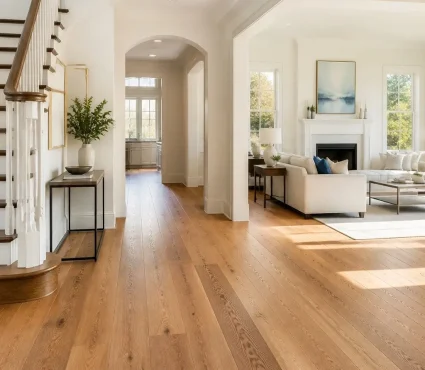
- Enjoy the warm color and timeless elegance of a natural wood floor, installed by our expert teams for homeowners across NJ and PA.
Years in Business
0
+
Hardwood Flooring Installation
0
+
Average Review Score
0
.0
Licensed & Insured
0
%
Your Choices for Hardwood Flooring
We offer several ways to get that natural hardwood look you want, including solid, engineered, and speciality flooring. Each offers different price points, benefits, and suitability for different applications.
Solid Hardwood
Entirely made from 100% real hardwood, this is the most durable, longest-lasting flooring option there is. It can be sanded and refinished multiple times, with a lifespan measured in decades. The perfect choice in spaces where humidity and temperature can be kept consistent.
Engineered Hardwood
A real hardwood veneer bonded to a fibreboard or plywood core that retains the looks of natural wood but offers improved stability in spaces where temperature or humidity can vary considerably. Ideal for kitchens, basements, and similar spaces.
Species & Finishes
Classic oak, maple, or exotic options such as hickory, walnut, and cherry all create unique finishes for your room. Available as finished or unfinished products, we also offer custom stain colors and sheen levels to perfectly match your vision.
Hand-Scraped & Rustic Finishes
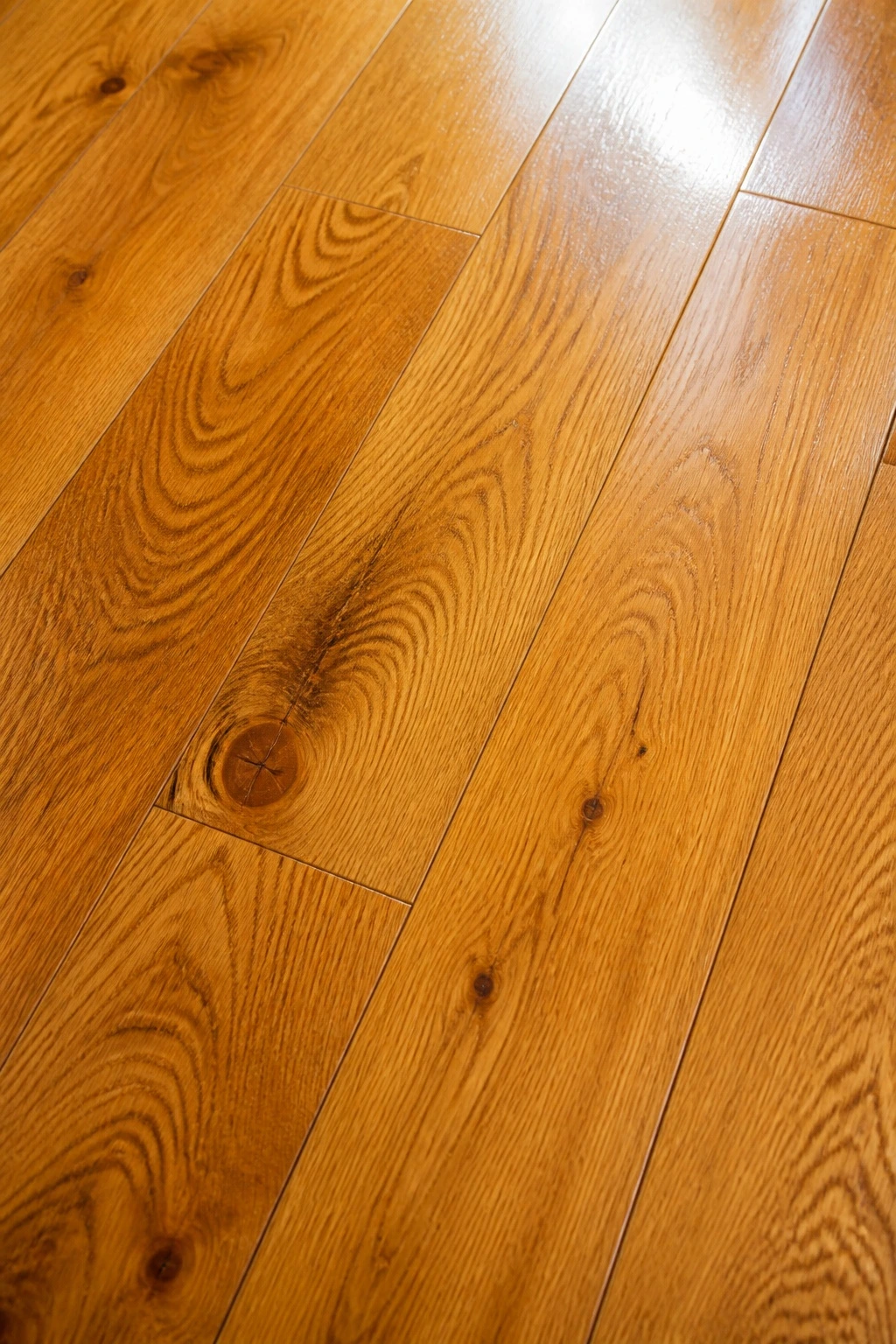
With their visible grain pattern, knots, and distressing, these options bring real character and natural warmth into your home. They are often better at hiding dirt and wear than high-gloss alternatives, and give a truly authentic look that nothing else can match.
Wide Plank & Custom Lengths
Offering a more modern, dramatic look than traditional-sized planks, they also allow for a more seamless installation that gives any room a feeling of space and openness.
Prefinished vs. Site Finished
Prefinished hardwood is factory sealed using UV-cured polyurethane, giving it guaranteed durability. Site-finished flooring is sanded and stained after installation for more accurate color matching to existing wood or décor needs.
More Than Looks: The Value of Real Wood
Hardwood flooring is usually described by the way it looks, because it does look beautiful. But the benefits go beyond that, and some might surprise you.
Generational Longevity
A quality hardwood floor can last for decades when properly installed and maintained. You can sand and refinish solid hardwood, restaining if you need, creating a new look from the same floor.
Long-Term Investment
Hardwood floors are more than a decorative surface. They are built to last, and as such represent a long-term investment in your home. The natural beauty, unmatched longevity, and broad appeal make them great for enjoying as part of your home and boosting value if it's time to sell.
Refinishing & Renewal Potential
Hardwood surfaces may be sanded and refinished, depending on the exact flooring product you have. Staining gives a fresh look, and repairs rather than replacements are also possible.
Hypoallergenic & Easy to Clean
The smooth surface of a hardwood floor is easy to wipe, sweep, or vacuum to maintain and clean. That low-maintenance ownership can often be as appealing as its looks.
Our Professional Hardwood Flooring Installation Process
With six clear steps, our process takes you from idea to a beautifully finished floor, as simply as possible.
01
Free In-Home Consultation and Precise Measurement
Our home visit includes a full consultation on the type and style of hardwood flooring you are looking for, as well as stain colors and finish preferences, along with a precision measurement process and full subfloor assessment.
02
Subfloor Inspection, Leveling and Moisture Testing
We inspect your existing subfloor for condition, moisture content, and levelness. Level subfloors and moisture management are key to finished floor quality. If there is any issue with leveling, structure, or moisture migration in the subfloor, we will take care of it as necessary to ensure a smooth, perfect installation.
03
Essential Wood Acclimation in the Home
We deliver the chosen hardwood flooring and leave it to acclimate in the room environment in compliance with the manufacturer’s recommendations. This is scheduled into the project timeline.
04
Moisture Barrier and Underlayment Preparation
Underlayment and moisture barriers appropriate for the specific flooring being installed are fitted, providing moisture protection. A critical step for installing engineered wood over concrete.
05
Precision Racking, Custom Laying and Board Staggering
Boards are racked across the room to our established plan, with precision cuts to ensure a perfect fit around any obstacles or walls. Once complete, they are fixed with nails, staples, or glue, depending on the material and subfloor used.
06
Trim, Transitions, and Final Inspection
All thresholds are installed at transitions, moldings are fitted, and baseboards are reinstalled. Final clean and inspection to complete the install once you are happy.
Hardwood in Older Homes: Solving Structural Challenges
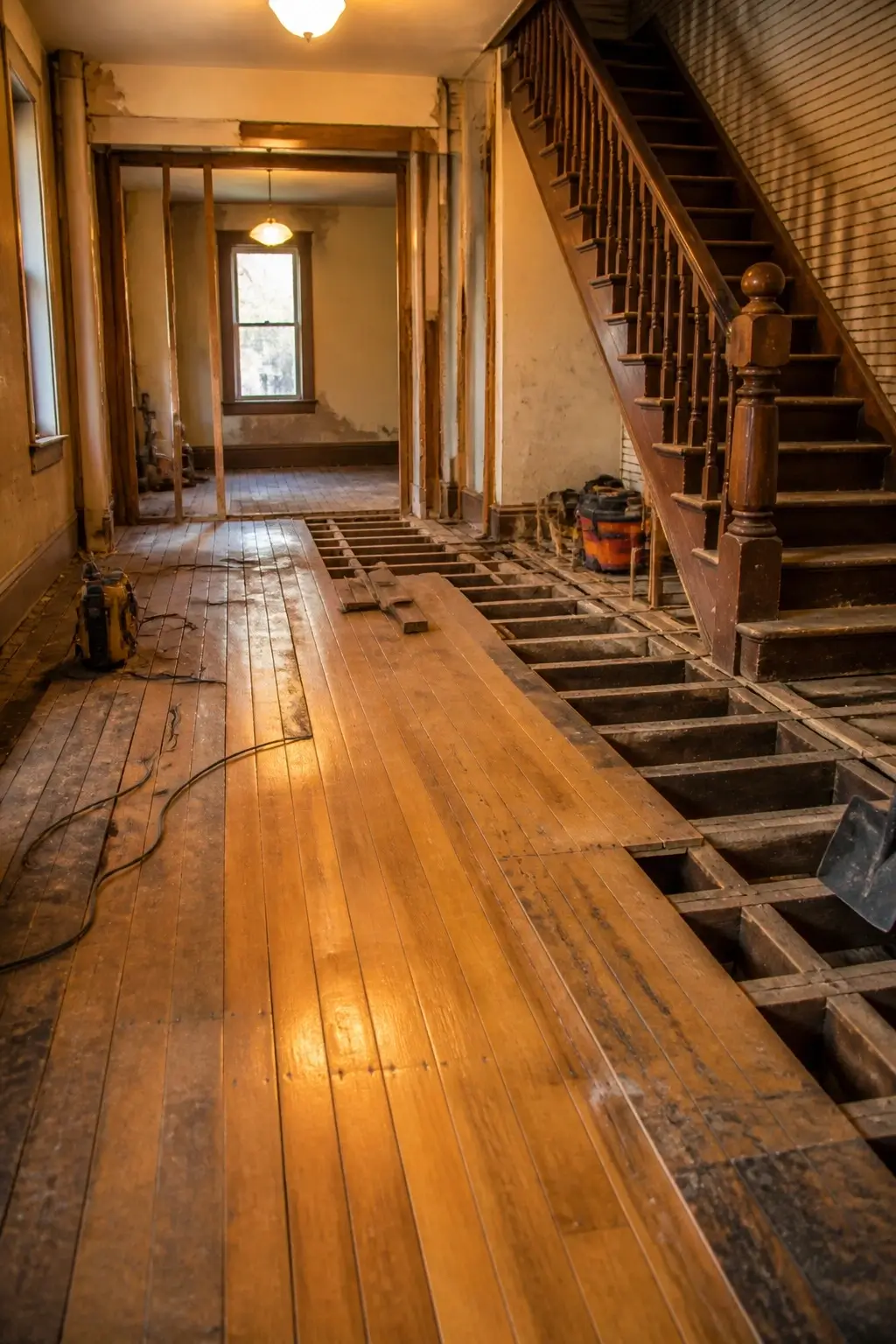
Older homes bring unique subfloor challenges. We take care of all of them before installing any flooring.
Uneven or Sagging Floors
In older homes, the subfloor is often no longer flat or stable. Our inspection identifies these issues, and we then determine whether the remedy requires levelling, reinforcement, or other treatment. This is carried out before any hardwood is laid.
Drafts and Moisture Infiltration
This includes areas such as crawlspaces, basements, and exterior walls, including any areas of potential moisture intrusion. If left, moisture can affect any flooring over time, so it should be remedied prior to installation.
Squeaking Original Subfloors
Rather than simply covering up the problem with a new floor, we investigate the issue to identify areas of movement in the subfloor or joists and propose remedial work to address the issue.
Solid Hardwood vs. Engineered Hardwood: Which is Right For You?
Both are real wood finishes; however, they offer very different performance depending on your subfloor room requirements and other factors.
| Solid Hardwood | Engineered Hardwood | |
|---|---|---|
| Wood Construction | Single solid wood plank, full thickness | Real wood veneer over multi-ply cross-grain core |
| Subfloor Compatibility | Plywood/wood only — not concrete | Concrete, plywood, or existing hard flooring |
| Moisture Resistance | Low — expands & contracts significantly | Good — dimensionally stable, less movement |
| Sand/Refinish Potential | Yes — 3 to 5+ times over lifetime | Limited — 1 to 2 times depending on veneer thickness |
| Radiant Heat Compatibility | Not recommended — high expansion risk | Yes — engineered core handles heat cycling |
| Basement Installation | Not suitable — moisture risk | Suitable with proper moisture barrier |
| Installation Methods | Nail-down or staple-down | Nail-down, staple, glue-down, or floating |
| Price Range | Mid to High | Mid to High — varies by veneer thickness |
- Get in touch today and book your in-person estimate for an accurate price for your next flooring project.
Cost Factors in Hardwood Installation?
Every project is unique, but here are the factors that impact the overall cost of your new floor.
Square Footage and Room Complexity
The larger the area, the less per square foot it costs thanks to labor efficiencies. Small rooms, stairs, and complex layouts need a higher level of labor per square foot, adding to the costs.
Wood Species and Plank Width
The species of wood used has a direct impact on cost, with domestic woods such as oak and maple being at the lower end. Exotic options like walnut and hickory, or wider plank sizes, add to material costs.
Subfloor Preparation
Any issues with the subfloor will show up in the final finish, so unevenness, moisture mitigation, and more must be addressed. More work means more costs.
Pattern Complexity
Simple layouts are less labor-intensive and cost less. More complex designs, with intricate patterns that require significant cuts and shaping, increase labor requirements and cost more.
Old Floor Demolition and Removal
We’ll remove the old floor and take away the debris. We include this in our pricing as a separate itemized cost.
Finishing Options
Prefinished floors cost less, but are not as customizable as site-finished options. With those, you can choose stain colors and sheen to perfectly match your décor or vision.
Project Timeline and What To Expect
We proceed with each project in defined phases, taking you from first assessment to final walkthrough. Knowing how this works makes planning your home much easier.
- 1–2 WEEKS
Consultation and Measurement
Our home visit includes a consultation on the style and type of flooring you want, your budget, a detailed measurement of the rooms, and finally an assessment of the subfloor condition.
- 1 WEEK
Material Selection
We offer an extensive range of hardwood flooring species, construction types, and finishes. We'll present samples so you can find the ideal option for your home and budget.
- 3–7 DAYS
Subfloor Preparation
We clean the subfloor, ready for inspection. If we find damage or unevenness, we address it at this point, then proceed with moisture barriers and underlayment if required.
- 3–5 DAYS
Acclimation and Site Prep
Hardwood flooring is delivered to the site and stored in the room to acclimate as per the manufacturer's recommendations. We will then remove furniture and prepare the area for the new flooring.
- 2–7 DAYS
Installation
We use nail-down, floating, or glued methods of installation depending on the material and situation, whichever is best for your floor. We take extra care with grain and layout here to maximize the material benefits.
- 1–2 DAYS
Trim & Transitions
We finish the install with transitions, trims, and moldings, followed by a thorough clean before final inspection for your approval.
- Timeline varies depending on square footage, condition of the subfloor, and material choices, along with installation method, pattern requirements, and room complexities.
- Why Choose Us
Why Homeowners Trust PHS Construction for Vinyl Installation
We have decades of experience providing high-quality hardwood flooring installation for homeowners in New Jersey and Pennsylvania.
Decades of Hands-On Construction Experience
PHS Construction has served the NJ and PA regions since the 1970s. We have a proven track record as expert flooring installers, including all types of wooden flooring for every budget and style.
In-House Certified Installers – No Unvetted Subcontractors
We don’t use subcontractors, so your install will be carried out by our own in-house team. They do all the work from start to finish to ensure consistency and quality at every stage.
Transparent, Itemized Pricing with No Hidden Costs
We provide full upfront pricing with detailed quotes, so you know exactly what it costs before work begins, with no hidden extras, guaranteed.
Fully Licensed and Insured Service Protection
We carry full liability coverage and valid NJ and PA contractor licenses to make sure you and your property are protected from our first visit to the last.
- faq
Frequently Asked Questions
The simple answers to the most popular questions we get asked about hardwood flooring installation.
What is the difference between solid hardwood and engineered hardwood flooring?
Solid hardwood is a solid piece of wood that can be sanded and refinished multiple times through its lifespan. Engineered hardwood is a real wood veneer, bonded to a multi-ply core, that offers reduced costs and improved stability in areas where humidity and temperatures fluctuate significantly. Both have very similar visual looks, but different applications.
Can hardwood flooring be installed over concrete slabs or in basements?
Solid hardwood cannot be installed over concrete or in basements and other below-grade spaces because of potential moisture issues. There are engineered hardwood products that are approved for concrete floors, but require vapor barriers during installation.
Which installation method is best: Nail-down, staple-down, glue-down, or floating?
It depends; each has different suitability depending on the floor type and subfloor involved. Nail-down or staple-down are most commonly used for solid hardwood flooring installed over a plywood subfloor. Glue-down is the option for engineered wood installed on concrete, while floating is the choice for certain engineered wood products and is frequently used in renovation projects.
What is the difference between pre-finished and site-finished hardwood?
Pre-finished hardwood has been sanded, stained, and then coated at the factory, producing a harder, more durable finish that is faster to install and doesn’t produce curing odors in the home. Site-finished flooring is sanded and finished after it is installed. This provides much greater flexibility in the color and sheen of your floor, allowing you to match existing wood or preferences exactly, although installation is a longer process as a result.
How do you handle expansion gaps around walls and baseboards?
As a natural material, wood expands and contracts as temperatures and humidity change throughout the year. We use a minimum of ¾ “ expansion gap around all fixed vertical surfaces, such as walls, posts, door frames, and cabinets. This gap is then covered by baseboards or moldings for a seamless look.
How long does hardwood flooring need to acclimate in my home before installation?
Acclimation allows the flooring to normalise its physical characteristics in the room. Without this step, the flooring can expand or contract after installation, causing gaps or buckling in the final look. Hardwood flooring usually requires between 3 and 7 days in the room. You should always follow the manufacturer’s instructions for acclimation.
What subfloor moisture levels are safe for installing hardwood floors?
We always follow the manufacturer's instructions on this. Most manufacturers suggest a maximum moisture content differential between the subfloor and wood of 2-4%. For concrete slabs, a measurement of moisture vapor emission rates (MVER) is used, and these are typically 3 lb per 1,000 sq ft per 24 hours without a barrier. We measure all aspects of moisture content before installation and propose any remedial work to ensure they remain in spec.
Can hardwood flooring be installed over radiant heating systems?
Some engineered hardwood products are designed for this application, subject to specific temperature ranges as outlined by the manufacturer. Solid hardwood is not suitable for this, due to its movement as a result of temperature cycling. We’ll guide you to the right product for any application.
Which wood species is the hardest and best for homes with dogs or heavy traffic?
To measure hardness, we use what is known as the Janka hardness scale. Among domestic species, hickory and maple come out on top, with exotics Brazilian cherry and santos mahogany being significantly harder still. While hardness will reduce scratching in pet households, there are no hardwoods that are completely immune. An oiled finish is easier to repair than a factory finish.
How much extra material, or waste factor, should I order for a hardwood project?
For a standard project where the hardwood is laid straight, a general rule is that you will need between 5% and 10% extra to cover waste. If you are laying herringbone style or other intricate patterns, expect around 15% waste, higher if the room itself is a complex shape. We always quote including waste so everything is covered.
- Get Started
Ready for New Floors?
We serve all neighborhoods. Estimates are free, written, and itemized — scheduled within 48 hours.