
- Home Additions
- /
- ADU Construction
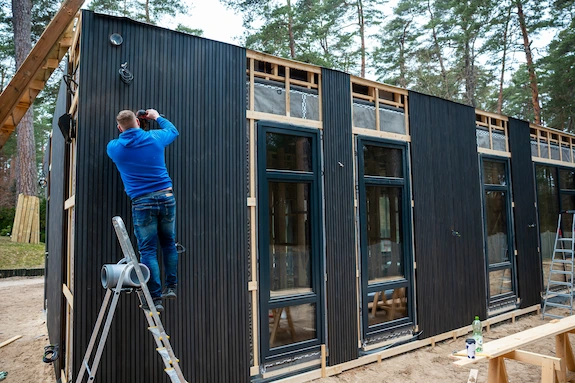
ADU Construction: A Standalone Living Space
Have you thought about ADU Construction but don’t know where to begin? Try our free consultation and we’ll explain what is and is not possible for your property and the options you have. From permits and zoning to final walkthrough, we take care of everything for you.
Years in Business
0
+
ADU Construction
0
+
Average Review Score
0
.0
Licensed & Insured
0
%
What is an ADU?
An accessory dwelling unit (ADU) is a secondary, standalone living space built on the existing lot your home occupies. Not every ADU is the same, though; here are the 5 types of additions you might want for your home.
Detached ADU
A standalone structure, either a complete new build or a conversion of a detached garage or outbuilding.
Attached ADU
These additions share at least one wall with the main house, but have an independent entry point and systems.
Interior Conversion
Using existing space in the property, such as a basement, attic, or rooms in the property.
Garage Conversion ADU
Converting an existing garage space is often the cheapest way to build an ADU for your property.
Junior ADU
A smaller unit within the primary home. They may be able to share a bathroom with your home, just needing an efficient kitchen to qualify. The simplest option.
Can You Get a Permit for an ADU?
Not every property is eligible for an ADU. Our first job as an ADU builder for your project is to find out if you can legally have one. Rules vary a lot, but here are the questions we answer first.
What Zoning District Are You In?
In some districts, Accessory Dwelling Unit additions are allowed by right, while other districts require specific conditions before an ADU can be built. In some, ADUs are not allowed at all.
Is Your Home Detached, Semi-Detached, or Attached?
In some locations, ADU construction can only be built on lots with a detached or semi-detached property, with attached homes often excluded.
Does the Structure Already Have to Exist?
In some jurisdictions, an ADU can only be built into an existing structure, or within the primary property itself. You can’t build any new structures.
Is There an Owner-Occupancy Requirement?
In many districts, you can only build an ADU if you, as the property owner, live on the property yourself. You can live in the main home or the ADU, but you must reside on the lot. If you plan to build an ADU and rent both properties out, you need to know if this applies.
Is Your Property Historic?
Having a historic property means that design-review requirements are more complex and stringent. But it also means that in some districts, you can build an ADU where non-historic properties cannot.
What Are the Size and Count Limits?
There are usually limits on square footage for ADUs, and you are mostly restricted to one per lot. You may also find height limitations, restrictions on bedroom counts and even rules about how many street-facing entrances are allowed.
If your property qualifies, an ADU offers incredible long-term value. If it doesn't, we'll let you know during your consultation before you spend anything on plans.
ADU or In-Law Suite? Are They the Same?
No. Understanding the difference can help you make the right choice when beginning your project. It’s very rarely explained properly, so our simple guide is designed to give you the information you need.
| ADU | In-Law Suite | |
|---|---|---|
| Legal status | Separate dwelling unit | Part of your house |
| Kitchen | Full, independent | Often none, or a kitchenette |
| Entrance | Independent | May be shared |
| Separately rentable | Yes, where permitted | No |
| Zoning eligibility | Restricted, varies widely | Generally unrestricted |
| Deed restriction | Often required | None |
| Separate utilities | Often required | No |
| Assessment impact | Higher | Lower |
When an In-Law Suite Is the Better Answer
If you aren’t looking for rental income and instead want a place for family or a caregiver, then an in-law suite can provide private accommodation like an ADU, but without the zoning challenges. For many homeowners, this is the perfect option.
When Only an ADU Will Do
If you plan on using the addition for rental income, or family staying there will require their own, legally independent address, an ADU is the only option.
What Does an ADU Cost?
Here are 7 factors that impact your overall cost.
Conversion vs. New Construction
Converting existing space — a garage, a basement, an attic — is substantially cheaper per square foot, because the foundation, walls, and roof already exist. New detached construction costs the most.
Utility Connections
If utilities are a distance away, trenching adds to your overall cost. The farther away they are, the more expensive the trenching is.
Whether Separate Metering Is Required
Some jurisdictions require independent utility service and metering. This can add significantly to the cost.
Kitchen And Bathroom
These are the two most expensive rooms to build in any property. Your ADU requires both.
Site Conditions
How easy it is to access the site dictates what kind of equipment is needed. Cranes and other heavy machinery mean more expensive construction.
Permit And Impact Fees
These really depend on your district. The actual costs can vary wildly depending on your location, and with some areas charging for utility connection or impact fees, it can be a big number. We will carry out a feasibility study when preparing your quote, so everything is included.
Finishes
If you are creating a space to be rented out, you’ll have different costs for finishing than for something for an elderly parent.
How Long Does an ADU Take to Complete?
Each project is different, but these are the guidelines we work from.
2 Design And engineering
- 6–12 weeks
3 Permitting
- 8–16 weeks, longer where design review applies
4 Interior or garage conversion
- 3–5 months
5 New detached construction
- 6–12 months
Why does Permitting Take So Long?
Unfortunately, ADU applications often require multiple reviews, more than other types of additions do. There is zoning, building, utilities, and, depending on location, a design review to go through. Sometimes, these have to happen one after the other rather than together too. We are always honest about timelines, so yoy can make choices based on reality.
Can Anything Speed Things Up?
If you have already confirmed the ADU is eligible to be built before any design work begins, that can save some time. Having a full set of drawings at the initial submission helps too, and our experience in dealing with ADU permits makes sure we are as efficient as possible at every stage.
What's Included in Your Estimate?
We cover everything from that feasibility study through to the final walkthrough and handover.
Feasibility and eligibility research
Design drawings and structural engineering
Permit filing, plan review responses, and fees
Site work, foundation, and utility connections
Full construction — framing through finishes
Kitchen and bathroom
Mechanical, electrical, and plumbing
Final inspections and certificate of occupancy
Any named contingencies
Contingency and Change Orders
Site conditions and utility routing are the usual sources of surprise. We name what would trigger contingency and price anything outside scope in writing before proceeding.
Our Process
As an ADU construction company, we keep things simple, with just 6 steps from your idea to a complete ADU.
1 Eligibility Review
There is no point designing an ADU before we know what kind of ADU, if any, you are allowed to build.
- Zoning research
- Property type assessment
- Local code review
2 Feasibility And Budget
We check the site to see whether any additional work is needed, access limitations, and utility positioning, so we can provide budget guidance for the project.
- Site analysis
- Utility assessment
- Budget range estimate
3 Design And Engineering
Structural and architectural planning for the project.
- Design drawings
- Structural engineering
- Complete permit package
4 Permitting
Submitting, tracking, and responding during the review process for all required permits.
- Permit filing
- Plan review responses
- Hearing coordination
5 Construction
All site work to complete the ADU.
- Site preparation
- Framing & utilities
- Weekly progress updates
6 Inspection And Handoff
We provide the certificate of occupancy, walk through the property with you, and resolve any issues.
- Final inspections
- Certificate of occupancy
- Final walkthrough
- faq
Frequently Asked Questions About ADU Addition Contracting
Can I build an ADU on my property?
ADU’s are governed by local legislation, so ADU remodeling depends on your district. It can also be affected by whether your property is detached, semi-detached, or attached, your lot size, and any local rules on owner-occupancy and structure type. We check everything out for you as part of our quoting process.
Do I have to live on the property?
In some districts, yes. Regulations that insist that the lot owner occupies one of the properties is often enforced through a recorded deed restriction that can't be removed without approval. Some districts have no restrictions though; we check for you.
Can I rent it out short-term?
There are different rules for short-term renting, so it is important to check if you can do what you want to before investing in an accessory dwelling unit.
What if I'm not eligible?
As long as renting out was not the goal, an in-law suite is usually a good alternative as they avoid the ADU zoning requirements.
Do I need separate utilities?
In some cases, yes. It depends on local rules; some allow for shared connections instead, which saves a lot of money.
Is an ADU a good investment?
If you are allowed to build one, then yes, it adds to the value of the property and gives you options for lifestyle too. It must be permitted, though; try to build an unpermitted ADU and the financial benefits can never be enjoyed.
How do people usually pay for an ADU?
Renovation and construction loans are preferred, because they underwrite post-completion value rather than current value. This is important, as a legal dwelling unit is much more valuable than other types of building. Home equity and cash-out refinancing are also common.
Can I build a new backyard cottage?
Only where regulations allow for the construction of a new detached property on your lot. In some districts, you can only build additional dwelling units internally, or convert an existing structure, preventing new builds completely. We check to see what you can and cannot do during the quoting process.
How big can an ADU be?
There is usually a cap on floor area, but they differ a lot between jurisdictions. Some districts also place limits on overall height, number of bedrooms, and where your entrance is located too.
Will an ADU increase my property taxes?
An ADU adds square footage and income potential to your property, so will impact your property assessment. It can add significantly to your costs, so talk to a tax expert before committing.
Can I convert my garage into an ADU?
You can, assuming that your jurisdiction allows it. In fact, it's the most cost-effective approach to ADUs when available.
How long does the whole process take?
Depending on the scope, the permits and zoning required, and access limitations, it can take anything from several months to a year or even longer to build an ADU. Permitting is often a longer process than construction.
What's the difference between an ADU and a junior ADU?
A junior ADU is a smaller unit within the primary home. They may be able to share a bathroom with your home, just needing an efficiency kitchen to qualify. The simplest option for an ADU-type addition.
How much deposit should I expect to pay?
You should expect to pay between 10 and 25% of the total as a deposit, depending on the size and scope of the room. Later payments will be structured around completed milestones. If someone asks for significantly more than that, be cautious.
What happens if the permit is denied?
Your contract should include clauses for this before you sign it. It is also why we confirm eligibility as early in the process as possible, to avoid those situations.
Ready to Build an ADU or Remodel Your Space?
Schedule a free, no-obligation on-site estimate with an experienced ADU addition contractor. We'll assess your space, answer your questions, and give you an itemized quote before any work begins.