

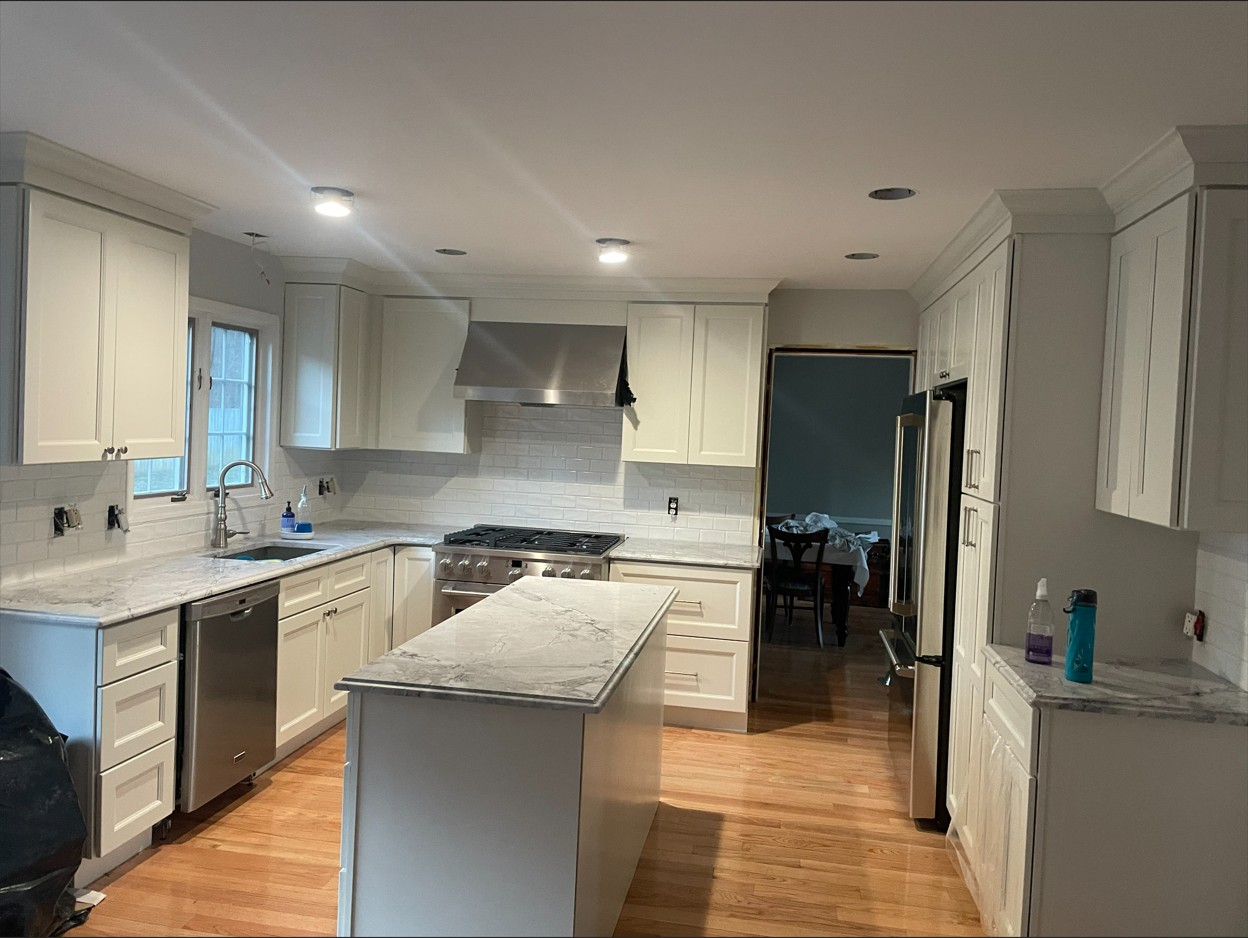

Deciding between an open concept kitchen and a traditional, closed-layout kitchen is one of the biggest choices homeowners face during a remodel. The right design affects daily life, entertaining, resale value, and how your home handles noise and cooking activity. This guide walks through the advantages and trade-offs of both styles, plus practical considerations specific to Chester, NJ homeowners so you can choose the layout that fits your lifestyle.
How Open Concept Kitchens Change Daily Life
Open concept kitchens remove barriers between the kitchen, dining, and living areas to create a larger shared space. This layout is popular for a reason:
- Social Flow: Open plans allow hosts to cook and socialize simultaneously. If you frequently entertain or want to keep an eye on kids while cooking, an open layout keeps everyone connected.
- Perceived Space: Knocking down walls makes smaller homes feel larger and brighter — an advantage for compact Chester properties with limited square footage.
- Natural Light and Sightlines: Removing partitions improves daylight penetration and creates long sightlines, which enhances modern finishes and kitchen islands.
- Flexible Use: Islands become multifunctional — prep zones, dining counters, homework stations, or office nooks.
However, open plans require careful material and appliance choices. Smells, steam, and noise are shared across the living area, so high-quality ventilation, quieter appliances, and easy-to-clean surfaces are essential.
Why Traditional Kitchens Still Make Sense
Traditional or closed kitchens keep cooking and living areas separate. This layout appeals to homeowners who prioritize function and containment:
- Containment of Odors and Noise: Closed kitchens keep strong food smells and dishwasher or vent noise out of living spaces, which can be important for frequent cooks or homes with open living areas that need quiet.
- Dedicated Work Zones: A separate kitchen allows more wall space for cabinetry and appliances, making it easier to design efficient work triangles and storage-rich layouts.
- Resale to Specific Buyers: Some buyers still prefer defined rooms rather than open layouts, particularly in neighborhoods where traditional architecture is common.
- Visual Tidiness: Mess and clutter stay out of sight, so you can maintain a more formal living room while you prepare meals.
The trade-off is that closed kitchens can seem smaller and less social. They may also reduce natural light and require more careful planning to avoid feeling cramped.
Key Design Considerations for Chester Homes
Chester, NJ homes vary in age and style — from historic to modern builds — and that context should guide your choice.
- Home Age and Architecture: Older or historic homes often retain more appeal with defined rooms. If you live in a colonial or Victorian property, careful integration of an open plan may require structural changes to preserve character.
- Natural Light: Assess window placement. If your living area already has good light, opening up a wall may enhance brightness throughout the space.
- Traffic Flow and Family Life: For families, consider how people move through the home. Open kitchens suit active households that use the kitchen as a hub. For quieter lifestyles or frequent hosting of formal dinners, a traditional kitchen could be preferable.
- Budget and Structural Work: Removing load-bearing walls adds cost and may require steel supports. Factor that into your budget early to avoid surprises.
- Heating, Cooling, and Ventilation: Open kitchens can change HVAC dynamics. Proper vent hoods and ducting reduce odors and humidity; heating and cooling loads may shift with larger shared spaces.
Functional Features to Prioritize Regardless of Layout
Whether you choose open or traditional, certain elements always improve usability and longevity:
- Proper Ventilation: A high-capacity range hood prevents lingering odors and moisture, vital for both open and closed kitchens.
- Durable Surfaces: Choose countertops and flooring that withstand spills and heavy use. In open plans, choose finishes that work visually with adjoining spaces.
- Smart Storage: Maximize cabinet layout, consider pull-out pantry units, and design island storage tuned to your routine.
- Lighting Layers: Combine task lighting (under-cabinet), ambient lighting (recessed or pendant), and accent lighting to create functionality and mood.
- Noise Control: Use appliances with low sones ratings and consider acoustic treatments if the kitchen opens into living areas.
Budget and Resale Impact
Open concept remodels often require higher upfront investment due to structural work, revised HVAC, and integrated finishes. However, when done well, they appeal to many buyers and can boost resale value—particularly if the remodel creates a seamless, high-quality living area.
Traditional kitchens may cost less if you’re not moving walls or rerouting major systems. For some Chester neighborhoods, keeping a traditional layout aligns better with buyer expectations and local architectural styles, which can be a resale advantage.
Making the Final Decision
Start with how you live today and how you expect to use the space in five years. If family gatherings and modern entertaining are priorities, an open layout likely fits. If you value formal rooms, noise control, or a preserved historic aesthetic, a traditional kitchen is likely the right choice.
Consult with a local remodeler who understands Chester zoning, structural requirements, and common home styles. A professional can provide a site-specific plan that balances aesthetics, functionality, and cost.
For a tailored consultation that considers your home’s layout and goals, call 732-766-0503 to speak with a project specialist. PHS Construction can help evaluate structural options, ventilation needs, and design choices to get the kitchen that works best for your life.